

Discover how mushroom cultivation is transforming rural India, empowering farmers, women, and youth through skill development, entrepreneurship, and sustainable agricultural practices. A national strategic shift.
India is witnessing a quiet but profound agricultural transformation as mushroom cultivation emerges as a significant driver of rural livelihoods and economic diversification. Leveraging minimal land and agricultural waste, this burgeoning sector is not only addressing nutritional security but also empowering thousands through targeted skill development and entrepreneurial support. This strategic shift underscores a national commitment to sustainable rural development and resource optimization.
Mushroom cultivation, valued for its low-calorie, high-protein, and nutrient-rich profile, presents an ideal avenue for income generation, particularly for small and marginal farmers, women, and rural youth. Its ability to thrive in various settings with limited resources makes it a crucial component in India’s horticulture sector expansion and a potent tool for economic upliftment.
Government Initiatives Drive Growth
The widespread success of this initiative is deeply rooted in robust governmental support and institutional frameworks. Programs like Skill Training for Rural Youth (STRY), facilitated by Krishi Vigyan Kendras (KVKs), State Agricultural Management and Extension Training Institutes (SAMETI), and the National Institute of Agricultural Extension Management (MANAGE), provide essential training from composting and spawning to harvesting. Further backing from the National Horticulture Mission ensures access to critical inputs and infrastructure, including the establishment of spawn production laboratories. These collaborative efforts form the bedrock of a scalable model for rural entrepreneurship across the nation.
Transforming Lives and Communities
Empowering Marginalized Communities
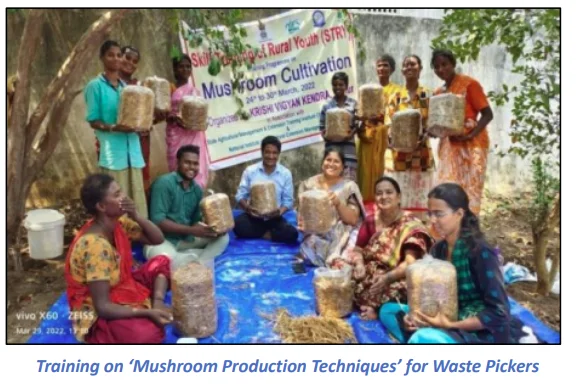
The journey of individuals like Ruthu from Ippatam village in Guntur district, Andhra Pradesh, who transitioned from waste picking to cultivating milky mushrooms and generating a substantial monthly income, exemplifies the direct impact of these programs. Her success, achieved through KVK Guntur’s training, inspired others in her community, demonstrating the ripple effect of practical skill development.
Fostering Community-Led Enterprise
In Anantpur village, Nalanda district, Bihar, Anita Devi’s pioneering efforts in mushroom cultivation, supported by KVK Harnaut, transformed her into the renowned “Mushroom Mahila.” Her enterprise inspired a collective movement, leading to Anantpur being declared a “Mushroom Village” and the establishment of a subsidized spawn production laboratory under the National Horticulture Mission. This model highlights the power of collective action and local leadership in fostering widespread economic development.
Diversifying Beyond Traditional Agriculture
The appeal of mushroom cultivation extends beyond traditional farming. Professionals like Anjanaben Gamit, a civil engineer from Tapi, Gujarat, and Hiresha Verma, an IT professional from Charba village, Dehradun, have successfully leveraged KVK training and technical guidance to establish thriving mushroom enterprises. Their stories illustrate how modest initial investments, coupled with strategic planning and market linkages, can lead to significant profitability and job creation. Hiresha Verma’s “Han Agrocare,” for instance, evolved from a small-scale operation to a one-tonne daily production capacity, employing 15 people and diversifying into specialty mushrooms and value-added products like pickles and protein powder.
Innovating for Hill Economies
In challenging terrains, such as Uttarakhand’s Bageshwar district, initiatives under the Scheduled Caste Sub Plan (SCSP) by ICAR-DMR Almora have introduced protected cultivation structures like portable polyhouses. Madan Mohan’s success in cultivating button mushrooms and off-season vegetables, significantly boosting his income, showcases how targeted interventions can adapt to specific regional needs and foster economic resilience even in remote areas.
Key Enablers and Strategic Impact for Bharatha
The widespread success of mushroom cultivation across diverse regions and demographics can be attributed to several critical factors:
- Targeted Skill Development: Programs like STRY, delivered through KVKs, provide essential practical training, making complex agricultural techniques accessible.
- Institutional Handholding: Continuous technical guidance and support from agricultural institutions are vital for new entrepreneurs, ensuring sustainable practices and problem-solving.
- Resource Efficiency: Utilisation of agricultural waste (like paddy straw) and minimal land/water requirements make it an accessible and sustainable enterprise for smallholders.
- Market Linkages: Development of local supply chains, direct consumer sales, and value-added product diversification ensures stable income and economic resilience.
- Community Empowerment: The model fosters local leadership and inspires collective action, amplifying economic impact and promoting knowledge-sharing within communities.
This holistic approach transforms mushroom cultivation from a mere agricultural activity into a robust pathway for livelihood diversification and entrepreneurship, aligning with India’s broader agenda for inclusive economic growth and rural prosperity. The nationwide proliferation of these successful models underscores a critical strategic callout for Bharatha: this initiative represents a scalable blueprint for economic diversification, sustainable resource management, and the creation of resilient rural economies across the nation. By transforming agricultural waste into wealth and equipping citizens with practical, demand-driven skills, the government’s focus on this sector contributes significantly to national goals of inclusive growth, nutritional security, and entrepreneurial empowerment.